


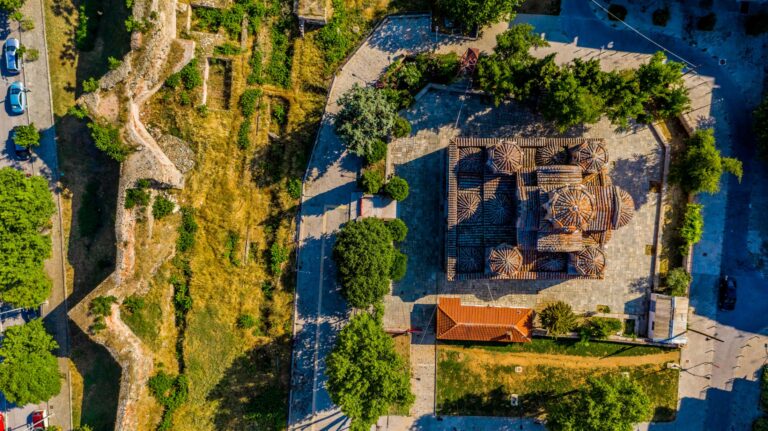
The Holy Apostles was the central church of a monastery, dedicated to the Virgin Mary. It was built in 1310-1314
Approaching Corfu from the sea, the first thing the visitor sees is the Old Fortress, a monument witnessing the turbulent
The new Venetian Fortress, overlooking the old city port, does not bring together so many visitors as the Old one
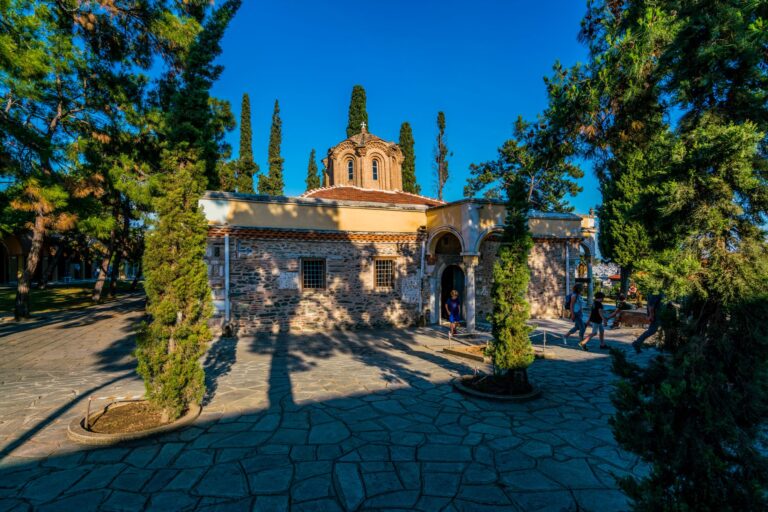
The patriarchal monastery of Vlatadon was founded in the period 1351-1371 century, belongs to the Ecumenical Patriarchate of Constantinople and
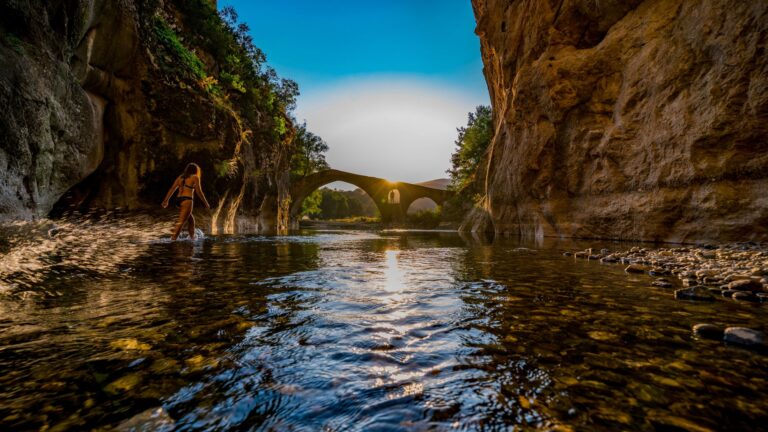
Portitsa bridge, built at the root of the gorge under the village of Spileo, prevails the stone landscape of the
Just outside the village of Vrontero, you will discover the well-hidden “Cave of Kokkalis”, which is an important memorial site
The picturesque little island of Agios Achilleios, in the lake of the small Prespa, creates a unique ecosystem that attracts
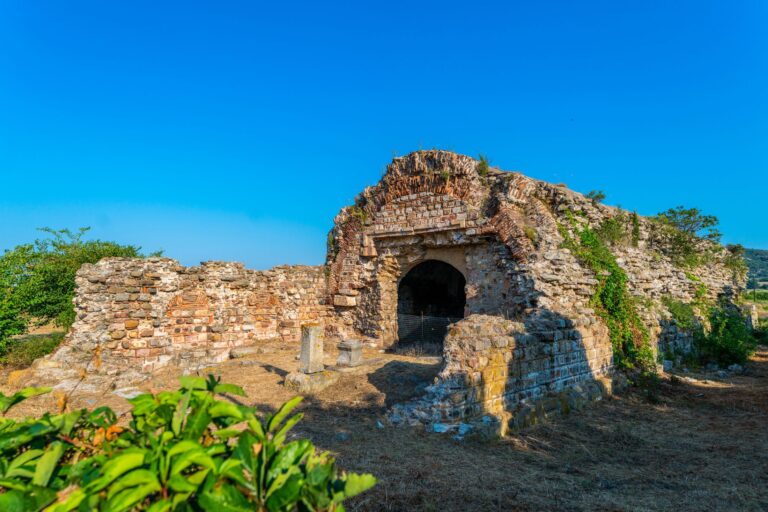
Old baths and the ruins of a spectacular building called the Hana still survive at Traianoupolis spa; the Hana, which
The Small Theatre of ancient Ambracia, built during the reign of Pyrrhus, King of Epirus, in the early 3rd century
The story of this place starts from a settlement called Aspri Valta, built in the 16th century, south of the